

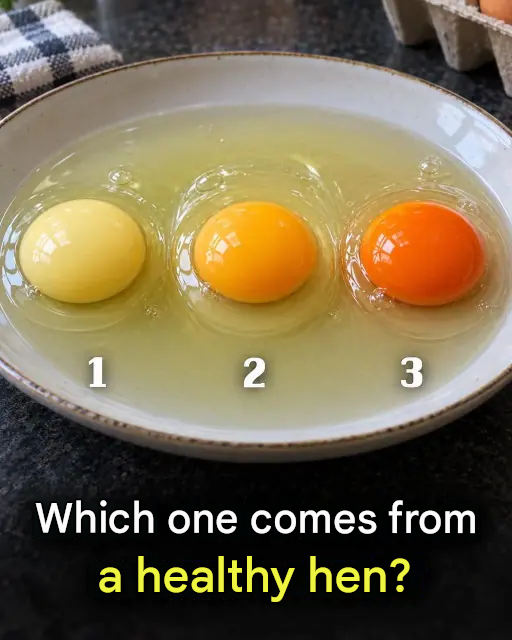
We’ve all done it: cracked an egg into the pan, looked at the yolk, and thought, “That one definitely came from a good hen.” A bright orange yolk is a sign of quality, right? And a pale yolk screams “factory-farmed egg.” This idea is everywhere: on social media, in conversations in the kitchen, at the market… But the truth behind the color of an egg yolk is much more nuanced than we think.
The color of yellow is primarily a matter of diet.
Here’s something few people really know: the shade of yellow depends almost exclusively on what the hen eats. Not on her well-being, not on her overall health. Just on her plate.
Hens that eat food rich in carotenoids—natural pigments found in corn, marigold petals, alfalfa, or certain vegetables—lay eggs with golden or orange yolks. Those whose diet is lower in these pigments produce lighter yolks. It’s as simple as that.

An orange yolk does not necessarily mean a “better egg”.
This is where it gets really interesting. Some industrial producers simply add carotenoid-rich ingredients to their hens’ feed to obtain darker egg yolks. The result: a beautiful orange-yellow… without this guaranteeing better farming conditions.
Conversely, a free-range hen, happy and in perfect health, can very well lay pale-yolk eggs if her diet contains few of these natural pigments. Color alone is no reliable indicator of the egg’s actual quality.

What really matters when choosing your eggs
So how do we find our way around? A few concrete landmarks are much better than a glance at the yellow.
First, freshness : a fresh egg, cracked into a pan, has a thick white that holds its shape well around a firm, rounded yolk. If everything spreads out and becomes runny, the egg is no longer very fresh.
Next, look at the information on the box . In France, labels like “free-range,” “organic,” or “Label Rouge” provide real information about farming conditions. This information is much more informative than the color of the yellow packaging.
Finally, note that the color of the shell—white or brown—makes absolutely no difference to the nutritional value. It’s simply a matter of chicken breed.

What eggs really bring to our body
Regardless of the yolk color, the egg remains one of the most complete foods available. It is packed with high-quality protein, vitamin B12, vitamin D, selenium, choline, and lutein—valuable nutrients for muscles, the brain, and eye health.
Studies show that eggs from free-range hens can contain more omega-3 fatty acids and certain vitamins. But again, it’s the hen’s diet that makes the difference—not the color of her yolk.
Next time you choose your eggs, look at the label rather than the yolk: that’s where the real information is hidden.